








Ask any friend who's thinking about buying a dishwasher, and nine times out of ten the first thing they say is: "But won't it use more water than washing by hand?" Honestly, I've heard this misconception more times than I can count. What people picture is a machine with water gushing for a solid half hour—hardly the picture of water efficiency. But the reality is that a well-designed dishwasher uses water in a completely different way from hand washing. Hand washing means turning on the tap and letting the water run straight down the drain. A dishwasher heats and pressurises a set amount of water, then circulates and sprays it repeatedly inside the machine, squeezing every last drop of use out of the same batch before draining it. So the idea that "dishwashers waste water" doesn't necessarily hold up. This time, we're pulling the official data for three popular Fotile Hong Kong models and laying out the water usage for each programme, so you can judge for yourself.
The "hidden water bill" of hand washing you might not have noticed
Let's start with hand washing. If a Hong Kong household is in the habit of rinsing every plate under a running tap, using 15 to 30 litres for one meal's dishes is not unusual at all—those ten-odd minutes of washing go straight down the drain. A dishwasher works on a completely different logic: it heats a set amount of clean water to 50–75°C, adds detergent, and uses a high-pressure pump to spray it repeatedly onto the dishes. Once the grease is washed off, the water passes through a filter and rejoins the cycle, only draining when the programme ends. Every litre of water gets "used" far more times inside the machine than it does in that single pass over a plate during hand washing. That's exactly why, in the tables below, some models' eco modes can use less than 10 litres.

Three models, programme by programme
Below is a summary of the water usage for different wash programmes across three Fotile dishwasher models, for your reference. Bear in mind that actual water consumption is affected by inlet water temperature, water pressure, room temperature and load size—the figures are for comparison when choosing a model.

SD2F-P7 Sink Dishwasher (11 place settings)
| Wash Programme | Standard Programme Time | Standard Water Consumption |
|---|---|---|
| Express Wash | 30 min | 11 L |
| Daily Wash | 58 min | 14 L |
| Intensive Wash | 90 min | 17 L |
| Eco Wash | 240 min | 9.0 L |
| Crystal Wash | 80 min | 14 L |
Source: SD2F-P7 product manual
Why choose it: The SD2F-P7 is the upgraded version of Fotile's sink dishwasher, with 11 place settings and a two-tier split design that lets you wash dishes and pots at the same time instead of in two rounds. The standout is that the Eco Wash uses just 9 litres—impressive water efficiency for 11 place settings. When you're in a hurry, the 30-minute Express Wash handles a small load of lightly soiled dishes with 11 litres, so washing after every meal won't make you wince. With HydroJet 3.0 high-energy bubble wash and 100°C steam sterilisation, you're not compromising on cleaning power or hygiene to save water. You can also add a draining board and basket to combine washing, chopping, prepping and draining on one sink counter—a genuinely practical touch for Hong Kong's notoriously tight kitchens.

SD2F-P6 Sink Dishwasher (5 place settings)
| Wash Programme | Standard Programme Time | Standard Water Consumption |
|---|---|---|
| Express Wash | 15 min | 8 L |
| Rapid Wash | 45 min | 10 L |
| Intensive Wash | 80 min | 12 L |
| ECO Wash | 180 min | 6.2 L |
Source: SD2F-P6 product manual
Why choose it: The SD2F-P6 is aimed at smaller households—5 place settings map neatly onto a two-to-three-person home's daily meal, so you'll never face the awkward "only a few bowls but running a whole big machine" situation. The ECO Wash needs just 6.2 litres, the lowest of the three models; and if you want to wash right after breakfast, the 15-minute Express Wash gets it done with 8 litres. Despite the smaller capacity, it's equipped with HydroJet 40,000 Pa high-pressure jets and high-energy bubble wash 2.0, so cleaning power isn't compromised—and it even handles fruit, veg and seafood purification, covering both dishes and food prep in one space-saving machine.

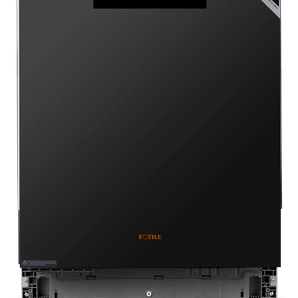
BD3B-G3-Y Built-in Dishwasher (18 place settings)
| Wash Programme | Standard Programme Time | Standard Water Consumption |
|---|---|---|
| Express Wash | 60 min | 18 L |
| Daily Wash | 90 min | 18 L |
| Intensive Wash | 130 min | 18 L |
| Crystal Wash | 120 min | 17 L |
| Auto Wash | 105–145 min | 18 L |
| Eco Wash | 300 min | 13 L |
| Silent Wash | 180 min | 17 L |
Source: BD3B-G3-Y product manual
Why choose it: The BD3B-G3-Y is an 18-place-setting built-in model for households with heavy daily dish loads, frequent gatherings, or a need to wash a large batch of pots in one go. The numbers might make you think "18 litres?", but think about it—it handles 18 place settings in a single cycle, so per-person water usage is genuinely competitive; the Eco Wash completes a full load with 13 litres, and spread across every item, the efficiency is just as impressive. The 50,000 Pa HydroJet 3.0 high-pressure jets paired with a planetary spray arm ensure no死角 even at full capacity; knock-to-open door, 100°C steam sterilisation and 168-hour long-term storage bring convenience and hygiene together for larger households.
Why can a dishwasher clean better with less water?
At the end of the day, it comes down to how the water is used. Hand washing is "single-pass flow"—the tap runs, water carries grease straight into the drain, and cleaning power comes from scrubbing and detergent, but a lot of clean water is drained before it's done much work. A dishwasher is circulating pressurised spray—a set amount of water is heated, detergent is added, and a high-pressure pump sprays it repeatedly; grease is broken down and rinsed away, the water is filtered and recirculated, and only drained when the programme ends.
Take the SD2F-P7's Eco Wash: 9 litres sprayed repeatedly over 240 minutes is enough for a deep clean of 11 place settings. Wash 11 place settings by hand under a running tap, and you'll easily exceed that. Not to mention the dishwasher's high-temperature washing and steam sterilisation—hygiene advantages that are very hard to replicate by hand.
So which one should I choose?
| Model | Best for | Water-saving highlight |
|---|---|---|
| SD2F-P6 | 2–3 person households, light dish loads | ECO Wash 6.2 L, lowest of the three |
| SD2F-P7 | 3–5 person households, pots and dishes together | Eco Wash 9.0 L, high efficiency at 11 place settings |
| BD3B-G3-Y | Larger households, frequent gatherings or heavy pot loads | 18 place settings, Eco Wash 13 L → low per-person usage |
When choosing a dishwasher, rather than fixating on the single-cycle water figure on the spec sheet, weigh the "total water per wash" against "your household's actual dish load". The Fotile Hong Kong website has full specs and installation information for every model—if you want to understand the difference between sink dishwashers and built-in dishwashers, and which suits your kitchen, take your time and browse our upcoming posts.